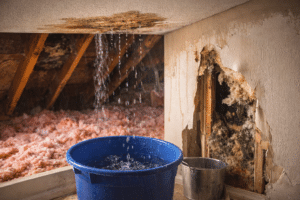
That water stain on your ceiling looks minor. Maybe it’s the size of a dinner plate. Maybe you only notice it after heavy rain. You tell yourself you’ll deal with it later—after the holidays, after tax season, after the next paycheck clears. Here’s the problem: small roof leak repair doesn’t stay small. What looks like a $300 fix today can become a $15,000 disaster in a matter of months. Understanding the true roof leak water damage cost helps you see why waiting is the most expensive decision you can make.
Stage 1: The Leak You Can’t See Yet
Most roof leaks start long before you notice anything inside your home. A few missing granules, a cracked shingle, or a small gap around a vent pipe lets water in during heavy rain. That water travels down the decking, soaks into the underlayment, and slowly works its way toward your attic.
At this point, you see nothing. No stains. No drips. But damage is already happening where you can’t see it.
This is the cheapest stage to catch a problem. A quick inspection and small roof leak repair at this point might cost a few hundred dollars. But without an inspection, most homeowners never know the leak exists.
Stage 2: The First Signs Appear
Now you notice something. A faint discoloration on the ceiling. A musty smell you can’t explain. Maybe the paint starts bubbling in one corner of a room.
This is the stage where most homeowners think they have a “small” problem. The visible damage looks minor, so the fix must be minor too — right?
Wrong. What you see inside represents the end of the water’s journey. By the time a stain appears on your ceiling, water has already traveled through your roofing material, decking, insulation, and drywall. Each of those layers has been absorbing moisture for weeks or months.
Small roof leak repair at this stage still costs far less than waiting. But the window is closing.
Stage 3: Hidden Damage Spreads
Here’s where the roof leak water damage cost starts climbing fast.
Wet insulation loses its effectiveness. Instead of keeping your home cool, it becomes a soggy sponge that holds moisture against your ceiling joists. Your energy bills creep up because your HVAC works harder to compensate.
Wood framing begins to rot. Roof decking, rafters, and joists that stay wet develop soft spots. Structural integrity weakens. What started as a shingle problem becomes a framing problem.
Mold takes hold. Houston’s humidity creates ideal conditions for mold growth. Once mold establishes itself in your attic or walls, remediation costs thousands of dollars — and that’s before you even fix the roof.
At this stage, you’re no longer looking at small roof leak repair. You’re looking at roof repair plus insulation replacement plus mold remediation plus drywall work. The bills stack up fast.
Stage 4: Major Structural Damage
Ignore a leak long enough and the damage reaches a tipping point.
Rotted decking can’t hold shingles properly. Weakened rafters sag. In extreme cases, sections of the roof structure fail entirely. What could have been a simple repair now requires a full roof replacement — and possibly structural reconstruction underneath it.
The roof leak water damage cost at this stage can exceed $15,000 to $30,000 depending on the extent. Insurance may cover some of it if the damage stemmed from a covered event like a storm, but policies don’t cover damage that results from neglect or deferred maintenance.
At this point, homeowners often say the same thing: “I wish I had just fixed it when I first noticed it.”
How Fast Does Damage Spread?
In Houston’s climate, faster than you’d think.
High humidity means materials stay wet longer. Mold can begin growing within 24 to 48 hours of water exposure. Wood rot accelerates in warm, moist conditions. A leak that might take a year to cause major damage in a dry climate can cause the same damage in a few months here.
Every rainstorm adds more water to the problem. Every humid day slows the drying process. The longer you wait, the more the damage compounds — and the higher the final bill climbs.
Why Homeowners Delay Repairs
Nobody ignores a roof leak because they want damage. They delay because:
- The visible signs seem minor
- They’re waiting for a better time financially
- They assume insurance will cover it later
- They don’t realize how fast damage spreads
The truth is there’s never a convenient time for roof repairs. But there’s always a cheaper time — and that time is now.
What to Do If You Spot a Leak
Don’t wait for it to get worse. The moment you notice a stain, drip, or musty smell, take action.
Schedule an inspection. A professional can trace the leak to its source and assess any hidden damage. What you see inside rarely tells the full story.
Document everything. If the leak resulted from storm damage, photos and inspection reports strengthen your insurance claim. Walton Residential Services offers full insurance claim assistance to help you navigate the process.
Get it fixed. Small roof leak repair costs a fraction of what you’ll pay if you wait. Protect your home and your wallet by addressing the problem early.
Don’t Let a Small Leak Become a Big Problem
A minor roof leak is a warning sign, not a problem you can ignore. The roof leak water damage cost grows every day you delay — from a simple repair to insulation damage to mold to structural failure.
Walton Residential Services helps Houston homeowners catch leaks early and fix them fast. Whether you need a quick repair or a full roof assessment, contact us for a free inspection. If you’re already dealing with active leaks, our emergency services team responds quickly to protect your home.