Choosing a shingle color feels like a style decision. You flip through samples, hold them up against your brick or siding, and pick whatever looks best. But in Houston, shingle color affects far more than curb appeal. It impacts your energy bills, your roof’s lifespan, and how hard your AC has to work every summer. If you’re planning a roof replacement, understanding the best roof color for hot climate conditions can save you money for decades to come.
How Shingle Color Affects Your Home’s Temperature
Dark colors absorb heat. Light colors reflect it. This basic principle applies to everything from the shirt you wear outside to the roof over your head.
On a summer day in Houston, a dark-colored roof can reach surface temperatures of 150°F to 175°F. That heat doesn’t stay on the surface — it conducts through the decking and radiates into your attic. Your attic heats up, your ceiling warms, and your AC kicks into overdrive trying to keep up.
A light-colored roof on the same day might only reach 100°F to 120°F on the surface. That 50-degree difference translates directly into less heat entering your attic, less strain on your cooling system, and lower electric bills all summer long.
When homeowners ask about the best roof color for hot climate regions like Houston, the answer almost always starts with going lighter.
Light Shingles vs. Dark Shingles: The Real Difference
The color you choose creates a chain reaction that affects your entire home:
Light shingles reflect 60 to 70 percent of solar energy. Less heat enters your attic. Your AC runs fewer cycles. Energy bills drop. Your roof materials also stay cooler, which can extend shingle lifespan by reducing thermal stress.
Dark shingles absorb 70 to 90 percent of solar energy. More heat transfers into your home. Your AC works harder. Energy bills climb. The constant heating and cooling cycle also accelerates shingle wear, potentially shortening your roof’s lifespan.
In northern climates, dark roofs make sense because they help melt snow and retain heat during cold winters. But Houston doesn’t have that problem. Here, heat management matters far more than heat retention — and light colors give you the advantage.
What About “Cool Roof” Shingles?
Manufacturers now offer shingles specifically designed to reflect more solar energy, even in darker colors. These “cool roof” shingles use specially coated granules that reflect infrared light while still absorbing visible light. The result: you can choose a darker aesthetic without absorbing as much heat as traditional dark shingles.
Cool roof shingles won’t perform quite as well as a true light-colored roof, but they close the gap significantly. If your HOA requires a certain color range or you simply prefer a darker look, cool roof options give you a middle ground.
When evaluating the best roof color for hot climate performance, ask your contractor about reflective shingle options. The technology has improved dramatically over the past decade.
Does Roof Color Affect Shingle Lifespan?
Yes. Heat breaks down roofing materials over time. The hotter your shingles get, the faster they degrade.
Asphalt shingles rely on oils in the asphalt to stay flexible and waterproof. Excessive heat causes those oils to evaporate faster, leading to brittle, cracked shingles that fail earlier than expected. Dark roofs in Houston experience this accelerated aging more than light roofs simply because they run hotter day after day.
Choosing a lighter shingle color — or a reflective cool roof product — reduces thermal stress and helps your roof last longer. Pair that with proper attic ventilation and you create the ideal conditions for maximum roof lifespan.
Energy Savings: How Much Can You Expect?
Studies show that switching from a dark roof to a light or reflective roof can reduce cooling costs by 10 to 25 percent in hot climates. In Houston, where AC accounts for a huge portion of summer electric bills, that adds up fast.
If you’re already dealing with a high AC bill in Houston, your roof color might be part of the problem. Combining a reflective roof with proper ventilation addresses heat at the source instead of just fighting it with more air conditioning.
Over a 20 to 30 year roof lifespan, the energy savings from choosing the right color can offset a significant portion of your roof replacement cost.
What About Curb Appeal and Resale Value?
Energy efficiency matters, but your roof also needs to look good. The right shingle color should complement your home’s exterior — brick, siding, trim, and landscaping all play a role.
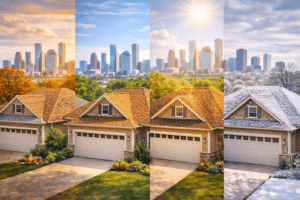
Light doesn’t mean white. Today’s shingle options include light grays, tans, beiges, and weathered wood tones that reflect heat while still delivering a polished, modern look. Many homeowners find that lighter tones actually photograph better and create stronger curb appeal than they expected.
From a resale perspective, buyers increasingly care about energy efficiency. A roof that keeps the home cooler and costs less to maintain adds value. It’s a selling point you can quantify — especially when you can show lower utility bills as proof.
How to Choose the Right Shingle Color
When selecting your shingle color, consider these factors:
Climate performance. In Houston, lean toward lighter or reflective options unless you have a specific reason to go dark.
Home exterior. Hold samples against your brick, siding, and trim in natural daylight. Colors look different under direct sun than they do in a showroom.
HOA requirements. Some neighborhoods restrict color choices. Check your guidelines before falling in love with a specific option.
Cool roof technology. If you prefer a darker aesthetic, ask about reflective granule shingles that reduce heat absorption.
Long-term value. Think beyond appearance. A color that saves you money every summer and extends roof life delivers value you’ll appreciate for decades.
Make the Smart Choice for Houston’s Heat
Your shingle color isn’t just a design decision — it’s a long-term investment in comfort, efficiency, and roof performance. In a climate like Houston’s, choosing the best roof color for hot climate conditions pays dividends every single summer.
Walton Residential Services helps homeowners select the right materials, colors, and ventilation systems to maximize energy efficiency and roof lifespan. Contact us for a free consultation and see how the right roof color can lower your energy bills and protect your home.